In a nutshell...
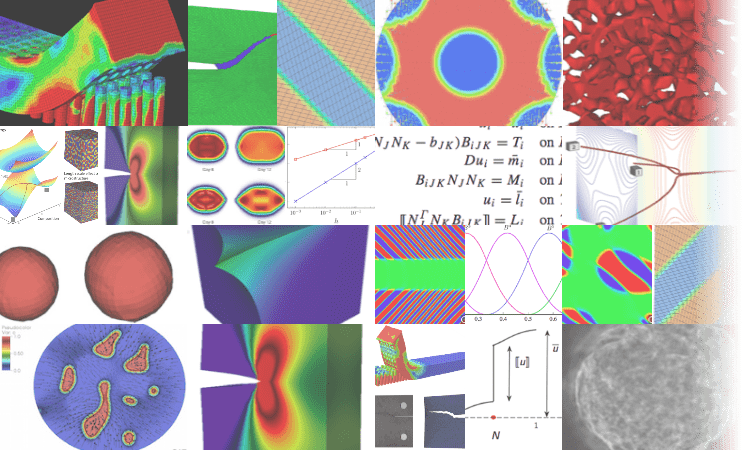
We model emergent phenomena in materials (structural and biological) that are driven by mechanics and multiphysics. Microstructural evolution, patterning processes and bifurcations are of special interest.
This work draws heavily from solid mechanics, continuum physics, thermodynamics and uses a spectrum of numerical methods and scientific computing platforms.
For details about ongoing and past projects, please look at the Research page.
Open positions: A PhD position is available for the Spring 2027 / Fall 2027 admission cycle, focusing on the multiphysics modeling of neuronal biophysics and brain injury. The research centers on the numerical modeling of neuronal-scale physics underlying brain injury, with a specific emphasis on mechanics, electrostatics, and chemical pathways. Selected students can expect to gain strong expertise in continuum mechanics, ODE/PDE modeling, and FEM-based multiphysics frameworks, while building a deep understanding of the underlying biophysics and neuroscience. Prospective students with a strong background or interest in biophysics, numerical modeling, and multiphysics are invited to email their CV to shiva dot rudraraju at wisc dot edu
-->Broad themes
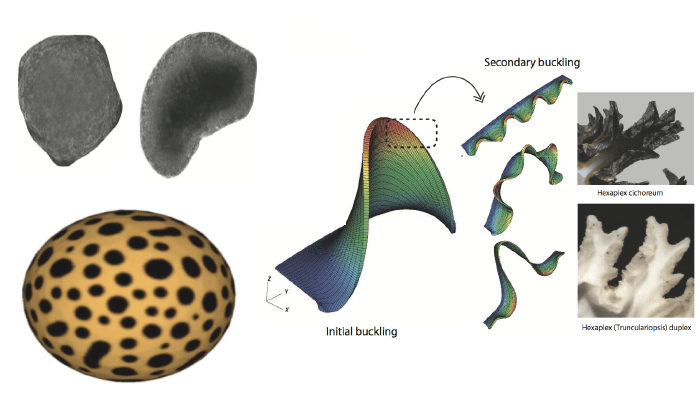
Morphology evolution in biological systems
Continuum treatment of various mechanics and multiphysics driven biological phenomena at the cellular scale (e.g. neuronal mechanics modeling, membrane processes like endocytosis, embryogenesis, etc.). This work requires coupling of mechanics, transport and electrostatic processes, often on surface manifolds, and involves study of instabilities and structural bifurcations.
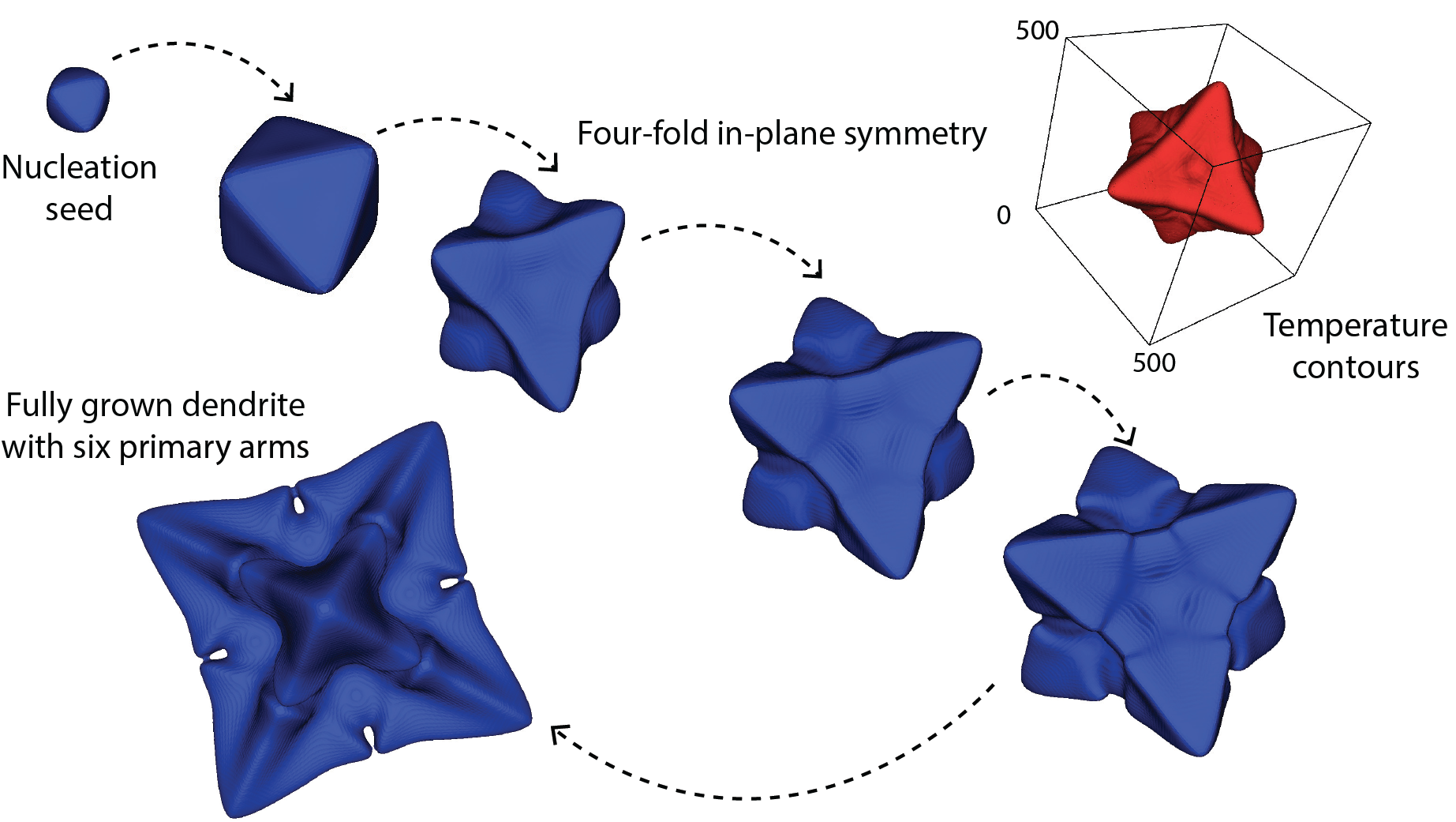
Microstructure evolution in manufacturing processes
Mesoscale modeling of mechanical deformation and microstructure evolution in manufacturing processes like Friction Stir Welding and Additive Manufacturing. This work involves modeling of the thermo-mechanics, formation of voids/defects, and evolution of microstructure (dendrites and grains).
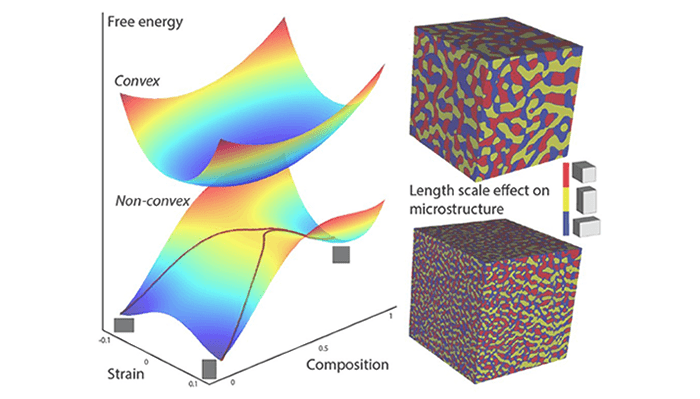
Phase transformations and stability of alloys
Theoretical and numerical modeling of elastic stability conditions (e.g. for crystalline to amorphous transformations, for martensitic transformation, etc.) and phase transformations in metallic alloys and functional materials.
- Theoretical elastic stability conditions for intermetallic alloys
- Microstructure evolution in nanostructured alloys
- Mechanochemical spinodal decomposition in multi-component solids
- Diffusion induced stress in Li-ion battery electrode particles
- Intrinsic length scale in gradient elasticity and its effect on cracks and dislocations
Numerical methods and scientific computing
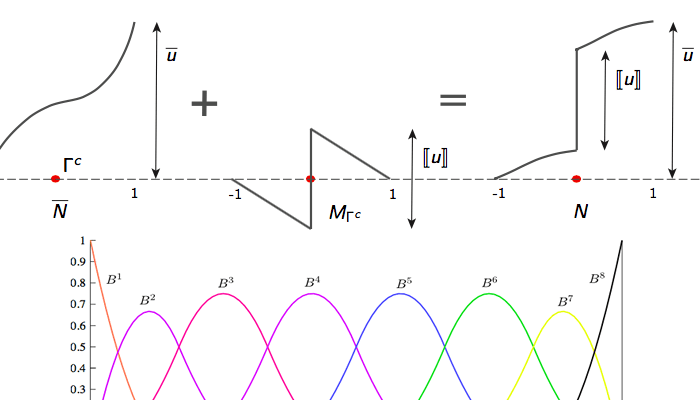
Developing numerical formulations (FEM, IGA, FDM, etc) and scalable code infrastructure for modeling coupled PDE's. Also involves developing numerical frameworks for modeling contact, fracture and phase evolution.